










How to Reduce Slippage? 5 Actionable Tips
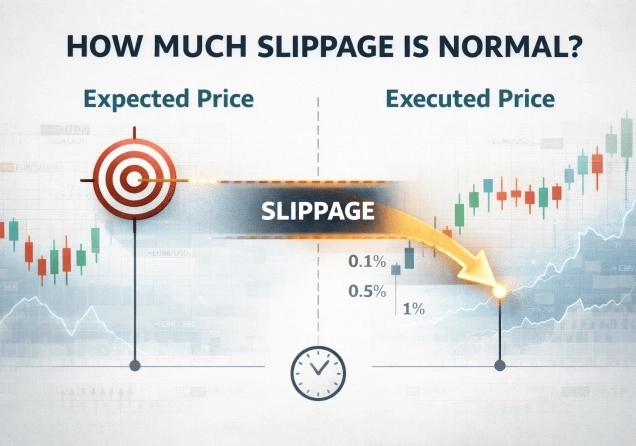
Slippage is an unavoidable part of trading, yet it remains one of the most misunderstood execution costs in financial markets. Slippage occurs when a trade is executed at a price different from what a trader expected. While it doesn’t appear as a visible fee, it can quietly chip away at profits over time. The good news is that while slippage cannot be eliminated entirely, it can be reduced significantly with the right approach.
In this article, we will explain how to reduce slippage using 5 practical and actionable tips. These methods apply across asset classes and trading styles, helping traders improve execution quality and trade with greater confidence.
Understanding Why Slippage Happens
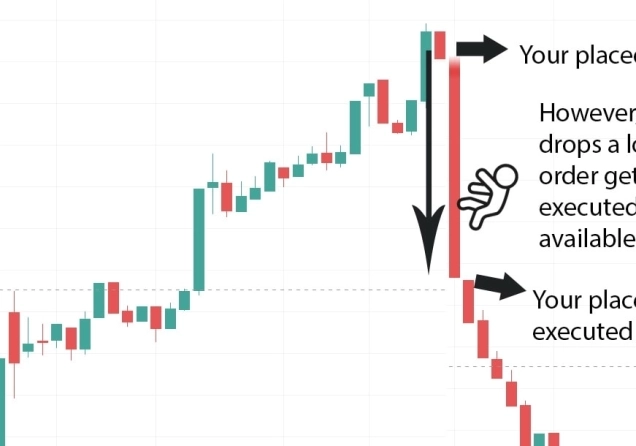
Slippage occurs because markets are dynamic. Prices change constantly as buy and sell orders stream in, and there is no guarantee that liquidity will always be available at a specific price. When an order reaches the market, and the requested price is no longer available, the trade is filled at the next best price.
Importantly, slippage can be either negative or positive. Negative slippage happens when a trade is filled at a worse price than expected, increasing costs or losses. Positive slippage, on the other hand, occurs when an order is executed at a better price than anticipated, slightly improving the trade outcome. While positive slippage is possible, it is unpredictable and should not be relied upon as part of a trading strategy.

Several factors increase the likelihood of slippage. Low liquidity means fewer available orders at each price level, making orders hard to fill at a given price point. High volatility causes prices to move rapidly, sometimes skipping over levels entirely. Additionally, large order sizes may need to be filled across multiple prices. Finally, execution speed and broker infrastructure also play an important role, particularly in fast-moving markets.
Understanding the various dynamics of slippage helps traders focus on what they can control. Below are some actionable tips to help traders reduce the frequency and impact of negative slippage while accepting that some degree of execution variance is unavoidable.
5 Actionable Tips to Reduce Slippage
1. Prefer Limit Orders Over Market Orders
One of the most effective ways to reduce slippage is to rely more on limit orders rather than market orders. A market order prioritises immediate execution, accepting whatever price is available at that moment. While this guarantees entry or exit, it also exposes the trader to unexpected price changes.
Limit orders, by contrast, allow traders to define the maximum price they are willing to pay when buying or the minimum price they are willing to accept when selling. This creates a clear range for execution and eliminates negative slippage beyond the specified level.
Using limit orders improves price certainty and makes trade planning more reliable. Risk management calculations become more accurate because entries and exits occur at known prices. The trade-off is that limit orders may not be filled if the market does not reach the desired level. However, many disciplined traders prefer missing a trade over entering at a worse-than-expected price.
2. Trade During High-Liquidity Market Hours
Liquidity is one of the most important factors influencing slippage. When many market participants are active, there are more orders available at each price level. This makes it easier to execute trades close to the expected price.
In forex markets, liquidity is highest during the London and New York trading sessions, particularly during their overlap. This period typically offers tighter spreads, faster execution, and reduced slippage. Stock and commodity markets also experience higher liquidity during core exchange hours. For cryptocurrencies, peak trading hours can be unpredictable, but slippage is minimal during peak global trading times.
Generally, slippage becomes more common during periods of low trading volume, such as late sessions, early market openings, holidays, or off-peak hours. Aligning trading activity with high-liquidity sessions improves execution quality and reduces unnecessary price shifts.

3. Avoid Trading During Major Economic News Releases
High-impact news events are a major source of slippage. Economic releases such as interest rate decisions, inflation data, employment reports, and central bank statements often trigger sudden price movements. Liquidity providers may widen spreads or temporarily withdraw orders. This can cause prices to jump from one level to another.
During these moments, even well-placed stop-loss orders can be executed far from their intended levels. As a result, traders may experience losses larger than anticipated. To reduce news-related slippage, traders can avoid opening new positions shortly before major announcements. Existing trades may be closed or reduced ahead of time, or stop-loss levels adjusted to account for increased volatility.
For most traders, staying out of the market during high-impact news is a simple and effective way to avoid unpredictable execution. Traders who intentionally trade news events usually do so with smaller position sizes while accounting for unavoidable slippage.
4. Match Position Size to Market Liquidity
Order size plays a direct role in slippage, particularly in markets with limited depth. When a large order is placed, there may not be enough liquidity at a single price level to fill it entirely. The order is then executed across multiple prices, resulting in an average fill price that differs from expectations.
This issue is common when trading exotic forex pairs, lower-cap stocks, or less popular cryptocurrencies. Even in liquid markets, oversized positions during volatile conditions can increase the chances of slippage. Reducing position size during low-liquidity periods helps limit this effect. Traders can also break larger trades into smaller orders or scale into positions gradually.
This approach allows the market to absorb orders more efficiently and improves overall execution quality. Adjusting position size based on market conditions is a practical risk management technique that protects against both slippage and excessive volatility.

5. Choose a Broker With Reliable Execution Infrastructure
Broker quality has a significant influence on slippage. Execution speed, server location, liquidity access, and order routing all affect how accurately trades are filled. Brokers with weak infrastructure or limited liquidity connections may struggle during volatile periods. This can increase the likelihood of poor execution.
Traders should look for brokers that offer fast execution, transparent order handling, and access to deep liquidity pools. Execution models such as ECN or STP typically route orders directly to liquidity providers, reducing interference and improving price accuracy. While no broker can eliminate slippage entirely, a well-regulated broker with strong technology can minimise it under normal market conditions.
Reviewing execution statistics, reading independent trader feedback, and testing with a small demo account can help assess performance. Choosing the right broker is not just about spreads or leverage. It is also about consistent and fair execution.
Closing Remarks
Slippage is a natural part of trading, but it is not uncontrollable. Understanding why slippage occurs and taking deliberate steps to manage it can help traders significantly reduce its frequency and impact. Rather than treating slippage as an unpredictable cost, it should be viewed as an execution factor that can be managed through informed decisions.
The strategies outlined in this article highlight how everyday trading choices influence execution quality. Integrating these into a trading strategy can help reduce exposure to unfavourable price movements. Over time, disciplined execution becomes a competitive advantage. When slippage is kept within reasonable bounds, risk management becomes more precise and performance more consistent.


Top-Tier Trusted Brokers
The table below contains links to 3rd party websites of our top partners from whom we receive compensation at no additional cost to you.