











How to Reduce Spread in Forex: 5 Actionable Tips
In forex trading, spreads represent the most common fee that traders pay for placing orders. In simple terms, the spread is the difference between the bid and ask prices. While spreads are a natural part of market structure, paying unnecessarily wide spreads can quietly erode profitability over time. This is especially true for traders who trade frequently, such as scalpers and day traders.
Learning how to reduce spread costs is a key part of becoming more cost-efficient and successful in forex. In this article, we will explore five practical and actionable ways to reduce spread costs in forex and improve overall efficiency.
What Is Spread in Forex Trading?
Before diving into reduction strategies, it’s crucial to understand what the spread is and why reducing it matters. The spread in forex trading is the difference between the bid price and the ask price of a currency pair. It is the major transaction cost charged by the broker for facilitating the trade. Whenever a trader opens a position, the trade starts slightly in negative territory because it is executed at the ask price or the bid price set by the broker, with the spread included.
Spreads can be either fixed or variable, depending on the broker and account type. Fixed spreads remain constant under normal market conditions, providing predictability. In contrast, variable spreads fluctuate based on liquidity, volatility, and market activity. Variable spreads are typically tighter during periods of high liquidity and wider during quiet or volatile market conditions.

Although spreads may seem small on individual trades, they can have a meaningful impact on profitability over time. This is why understanding what spread is and how to reduce it is an essential part of any cost-conscious trading strategy.
So let’s take a look at the top 5 actionable tips to reduce spread in forex.
5# Actionable Tips to Reduce Spread in Forex
1# Choose the Right Broker and Account Type
One of the most effective ways to reduce spreads in forex trading is by selecting the right broker and account structure. Brokers differ significantly in how they price trades, and these differences can have a major impact on trading costs.
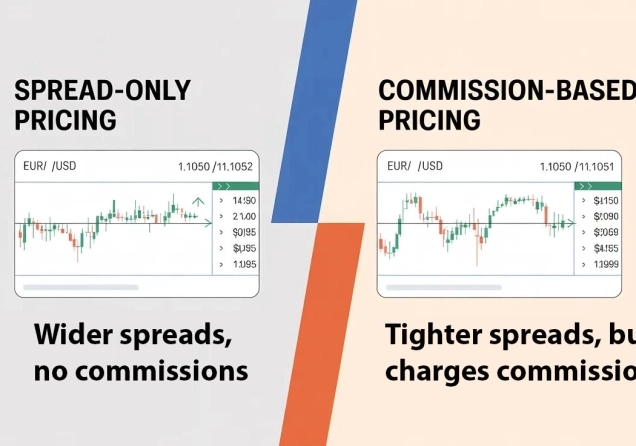
Some brokers operate as market makers, meaning they set their own bid and ask prices. These brokers primarily earn their revenue through spreads. They often promote commission-free trading, but the spreads are usually wider. Other brokers use STP or ECN models, where prices come from multiple liquidity providers. Because prices are more competitive in these environments, spreads are usually tighter, especially on major currency pairs. However, depending on the account type, these brokers may charge a commission to compensate for the ultra-low spreads.
It is also important to look beyond advertised minimum spreads. Many brokers promote extremely low minimum spreads that only appear during ideal conditions. What matters more is the average spread during normal market hours, especially on the pairs you trade most often. Reliable brokers are transparent about their pricing and maintain relatively stable spreads during high-liquidity sessions.
2# Select the Right Account Type
After choosing a broker with competitive pricing, the next step is selecting the right account type. Even with a good broker, the wrong account can result in higher spreads than necessary. The most common account types brokers offer include standard accounts and raw spread accounts.
Standard accounts often feature wider spreads, but with no commission charges. These accounts can work well for trading newcomers or traders who place relatively few trades. In contrast, raw spread accounts typically feature ultra-low spreads, usually from 0.0 pips, plus a commission, depending on the broker. This pricing model is usually more cost-effective for traders who trade frequently, such as scalpers and day traders.
The key is to match the account type to your trading activity. Traders who open and close positions often benefit from tighter spreads and commission-based pricing. Traders who trade less frequently may prefer the simplicity of a standard account.
3# Focus on Major Currency Pairs
The choice of currency pairs has a direct impact on the spreads traders pay. Major currency pairs, such as EUR/USD, GBP/USD, USD/JPY, and USD/CHF, are the most heavily traded instruments in the forex market. Because of their high trading volume and strong liquidity, brokers are able to offer much tighter spreads on these pairs.
Minor and exotic currency pairs, by contrast, tend to have lower liquidity. As a result, they often come with significantly wider spreads. While exotic pairs may present attractive volatility or unique trading opportunities, the cost of entry is usually much higher.
For traders whose goal is to reduce spread costs, focusing primarily on major pairs is a logical choice. Even among major pairs, spreads can vary depending on market conditions and session timing. As such, monitoring which pairs consistently offer the tightest pricing on your broker is a worthwhile habit.

4# Trade During High Liquidity Market Periods
Market liquidity plays a central role in determining spread sizes. When many buyers and sellers are active, brokers can offer tighter pricing due to increased demand and order flow. Conversely, when liquidity is low, spreads widen to compensate for higher execution risk.
The forex market experiences peak liquidity during the London session and, more importantly, during the overlap between the London and New York sessions. This period typically offers the tightest spreads, particularly on major currency pairs. Trading during these hours allows traders to take advantage of deep liquidity and more stable pricing.
In contrast, spreads tend to widen during quieter periods. These can include periods such as late in the Asian session, during session transitions, or close to market open and close times. Spreads can also expand dramatically during major economic announcements, news releases, and geopolitical events, even if the overall market volume is high. Timing trades to coincide with high-liquidity periods is one of the simplest and most effective ways to reduce spread costs.
5# Use Limit Orders Instead of Market Orders
Order type plays an important role in determining how much spread a trader ultimately pays. Market orders execute immediately at the best available price, which can be disadvantageous during periods of rapid price movement. In such situations, traders may unknowingly enter or exit positions at less favourable prices because conditions are constantly shifting.
Limit orders, on the other hand, allow traders to specify the exact price at which they are willing to buy or sell. By using limit orders, traders can avoid being filled at inflated prices caused by momentary liquidity gaps or volatility spikes. This provides greater control over execution and helps prevent paying unnecessarily wide spreads.
While limit orders do not guarantee narrower spreads, they are particularly useful around volatile markets. A useful tip here is to practice on a demo to refine placement and timing.
Additional Consideration
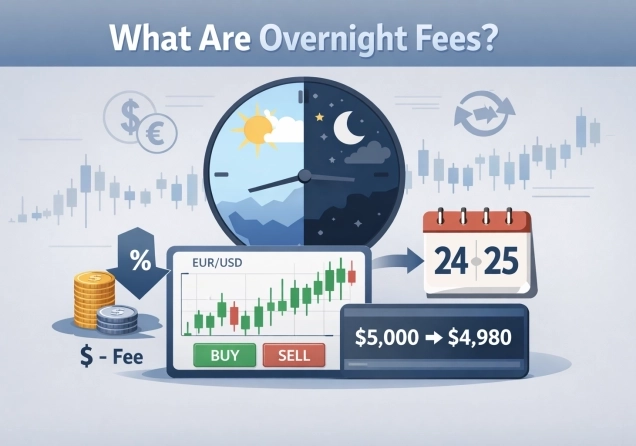
While the five tips above form the foundation for reducing spreads in forex trading, it’s important to maintain a balanced and realistic perspective. Spreads are a normal cost of participation in the forex market, alongside other costs like commissions and overnight charges.
Focusing too heavily on achieving the absolute lowest spread can sometimes lead traders to make poor decisions. For example, choosing an unreliable broker just to save a fraction of a pip can do more harm than good. Execution quality and slippage also come into play. A broker with slightly higher average spreads but fast, reliable execution can be more profitable than one offering ultra-low spreads with frequent requotes or delays.
Finally, never compromise on broker reliability. Above all, strong regulation and fund security should always remain a top priority. Well-regulated brokers with secure fund safety ensure that your trading performance isn’t undermined by avoidable risks.
Final Comments
Reducing spread in forex trading is not about finding shortcuts or unrealistic promises of zero-cost trading. Instead, it is about making informed, strategic choices that enhance overall trading efficiency. It requires a combination of informed broker selection, smart timing, careful instrument choice, and disciplined execution.
It’s important to remember that spreads are a natural part of forex trading. Occasional wider spreads are unavoidable, especially during volatile market conditions. What matters most is balancing cost reduction with execution quality, broker reliability, and fund safety.


Top-Tier Trusted Brokers
The table below contains links to 3rd party websites of our top partners from whom we receive compensation at no additional cost to you.